
The Second Golden Age of Television Is Over
The prestige TV era produced some of the greatest drama in the medium's history. Then the economics that made it possible collapsed, and we're only beginning to understand what we've lost.
Let me offer a periodization. The First Golden Age of Television is generally dated from the late 1940s to the early 1960s — live drama, Playhouse 90, The Ed Sullivan Show — a moment when the medium was new enough to attract serious artistic ambition and not yet so commercially dominant that it had standardized its own formulas. The Second Golden Age began in the late 1990s, when HBO demonstrated with The Sopranos that television could sustain novelistic complexity, moral ambiguity, and genuine artistic risk. It produced, over the following two decades, a body of work — The Wire, Breaking Bad, Mad Men, The Americans, Succession, The Bear, Severance — that I would argue constitutes the richest single tradition of dramatic storytelling in any medium since the novels of the 19th century.
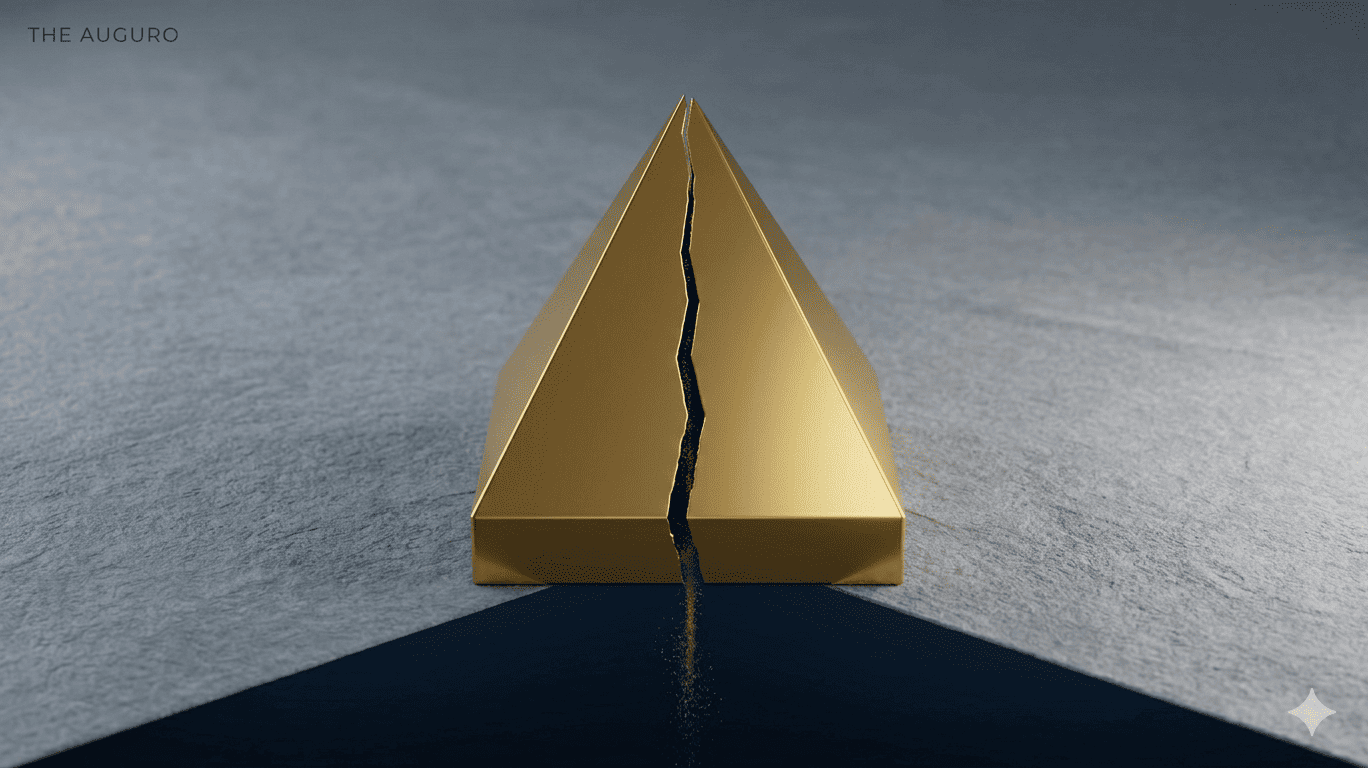
That golden age is now over. Not because the talent has dried up; the writers, directors, and actors who made this television are still at work. It is over because the economic conditions that produced it have collapsed, and no new conditions have emerged to replace them.
The Second Golden Age was funded by a peculiar convergence. Cable subscription fees gave networks like HBO, AMC, and FX a revenue stream that was partly decoupled from advertising ratings, allowing them to greenlight shows too difficult, too slow, or too unresolved for broadcast television. The DVD boxset business created an economic incentive for serialized complexity; a show you could watch again and discuss with friends was a show that sold physical media. And the early streaming wars — the period from roughly 2010 to 2022 when Netflix, then Amazon Prime, then Hulu, then HBO Max, Disney+, Apple TV+, and Paramount+ were all spending extravagantly to attract subscribers — flooded the prestige TV ecosystem with cash that allowed more bets on more ambitious work than the market would otherwise sustain.
The streaming wars are over. What won was not prestige television but Netflix. Having achieved something close to global streaming dominance, Netflix has spent the past three years optimizing its programming for engagement metrics rather than critical impact. The subscriber count it cares about is no longer in North America but in the developing world, where the preferences are different and the willingness to pay is lower. The result has been a dramatic shift in the balance between prestige originals and lower-cost content designed to occupy viewer time: reality television, game shows, licensed library content, international co-productions.
The other streaming platforms, most of which have never been profitable, are in varying stages of retreat. Disney+ has folded its most artistically ambitious programming into Hulu. Apple TV+ remains committed to prestige but is a small operation with a limited library. Peacock and Paramount+ are struggling for relevance. HBO — the defining institution of the Second Golden Age — has been subordinated within a Warner Bros. Discovery corporate structure that has treated it primarily as a cost center to be managed rather than a creative engine to be invested in.
The numbers tell a story. In 2019, FX chairman John Landgraf coined the term "peak TV" to describe a landscape in which the volume of scripted programming had become almost incomprehensibly large. By his count, more than 500 scripted series aired in the United States that year. By 2023, the number had begun declining. By 2025, it had fallen by nearly a third, with most of the losses concentrated in prestige drama and limited series — exactly the forms that defined the Second Golden Age.
This decline is not primarily about quality; the quality argument mistakes effect for cause. Prestige television declined because its economics were artificial. The streaming wars were fought with capital, not revenue. The companies spending freely on programming were not doing so because prestige drama was profitable; they were doing so because subscriber acquisition required impressive libraries, and impressive libraries required impressive originals. Once subscriber growth plateaued and investors demanded profitability, the economic rationale for spending $15–25 million per episode on complex, difficult television evaporated.
The shows that replaced them are cheaper and perform differently. A prestige drama might average 2 million viewers per episode in the United States and generate enormous critical attention, awards consideration, and cultural conversation. A reality competition might attract 10 million global views per episode and generate no cultural conversation at all — but it costs a tenth as much to produce and requires no creative infrastructure, no writer's room, no auteur director with a vision and a list of demands.
From a pure return-on-investment perspective, the math is not complicated.
The human cost of this transition is less easily calculated. The prestige TV era created something that had not previously existed in American culture: a sustained, institutionalized ecosystem for long-form storytelling that was accessible to mass audiences and taken seriously by critics, academics, and literary culture. The novel has this status; cinema has it; theater has it in limited, class-inflected ways. Television, for about 25 years, achieved it too — and then lost it.
This matters because the forms that a culture uses to tell its stories about itself shape what it is possible to think about itself. The Wire created a way of seeing urban poverty, institutional failure, and the drug war that no documentary, no news article, no policy paper had managed to communicate to a mass audience. Mad Men created a way of seeing 1960s America — its sexism, its racism, its conformity, its genuine creativity — that changed how a generation understood where it had come from. Succession created a way of seeing contemporary capitalism, inheritance, and the pathologies of the ultra-wealthy that served as cultural diagnosis as much as entertainment.
These are not effects you get from reality television, however popular reality television may be. Nor are they effects you get from the franchise films and IP-based sequels that have absorbed much of the creative talent and production capital that prestige television once attracted.
Is there a Third Golden Age in waiting? Possibly. The technology for producing and distributing long-form drama is cheaper and more accessible than it has ever been. There are writers and directors of extraordinary ability who want to make the kind of work that The Sopranos made possible. The appetite for it among the audience that watches prestige television — which skews educated, urban, and subscription-willing — has not diminished.
What is missing is a patron. The streaming era's version of HBO — a deep-pocketed institution willing to bet on difficult, uncommercial work as a deliberate strategy — does not currently exist. Apple TV+ is the closest thing, but it is too small and too committed to proprietary hardware to serve that function at scale.
The most likely scenario, in my view, is not a single institution but a fragmentation: smaller streaming services and independent production companies serving niche audiences with high-quality content, funded by premium pricing and direct patronage rather than mass subscriptions. This is, roughly, what has happened to independent film since Hollywood ceded the prestige space to streaming, and it is not a bad outcome, though it is a different one — less widely accessible, less culturally central, less likely to produce the shared experience that made The Sopranos finale a national conversation.
The Second Golden Age was a historical accident. Something extraordinary happened, and then the conditions that made it happen were changed by people optimizing for other things. That is the normal arc of cultural history. The interesting question is not how to restore what was lost — that is impossible — but what new forms will emerge from the ruins of an industry that spent two decades teaching an audience to expect more from television than television had ever previously delivered.
That audience still exists. It is still hungry. Whether anyone will feed it remains to be seen.
Nadia Chen is a staff writer at The Auguro covering culture, film, and television.