
The Memory Doctors
A new generation of neuroscientists believes it can selectively erase traumatic memories. They may be right. The harder question is whether they should.
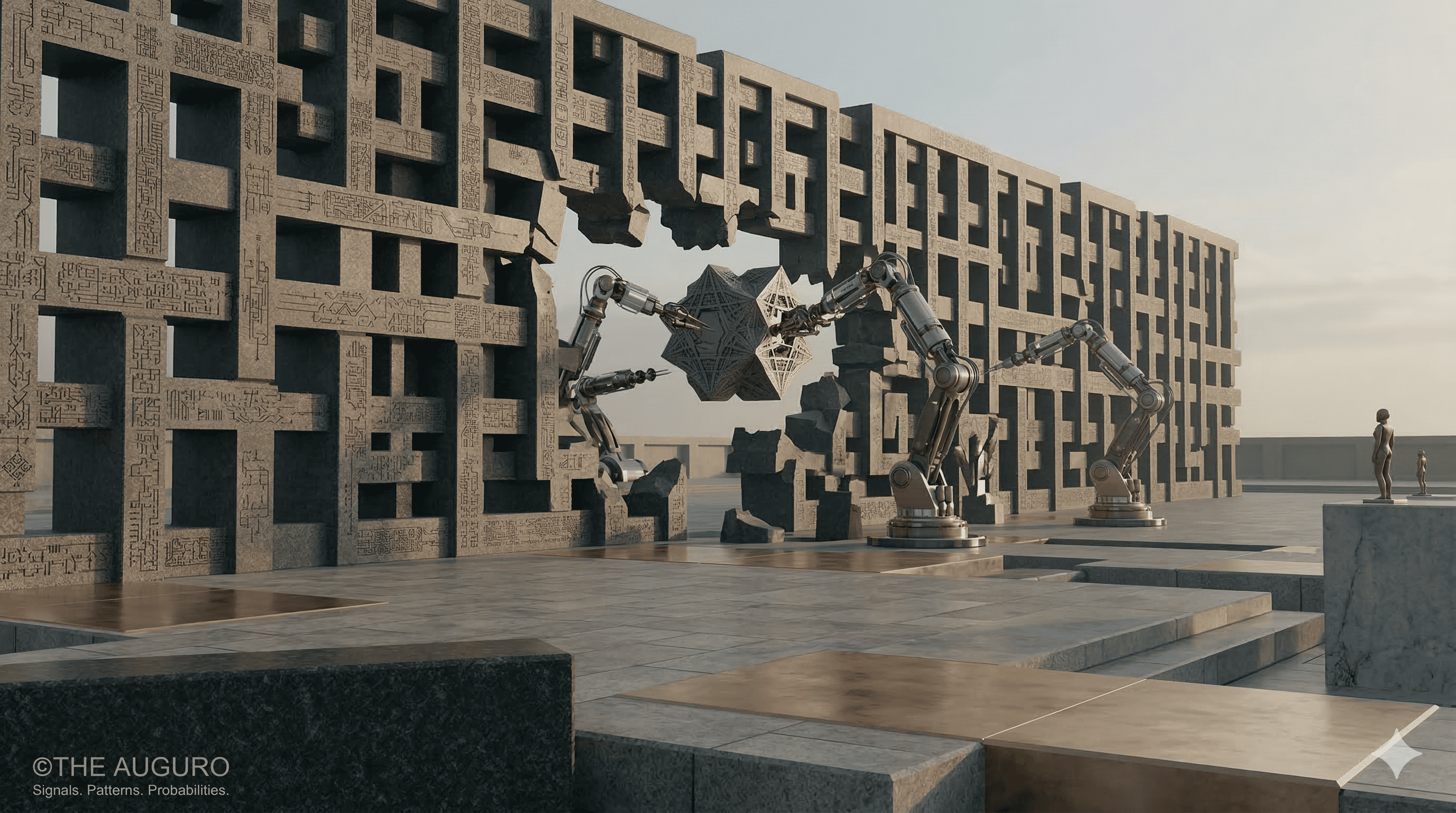
The laboratory of Dr. Sheila Bhattacharya at MIT's Picower Institute for Learning and Memory is not a dramatic place. It looks like other neuroscience labs — white walls, shelves of reagents, a hum of equipment — except for the mice. There are thousands of mice, housed in careful conditions, and many of them carry something unusual in their brains: a specific traumatic memory, encoded in a specific cluster of neurons, that Dr. Bhattacharya can locate, activate, suppress, and in limited cases, erase.
I visited on a Tuesday in February and watched a graduate student run a protocol on a mouse that had been conditioned to fear a particular sound. The mouse's fear memory lived in a cluster of neurons in its basolateral amygdala that had been genetically tagged to fluoresce green under laser light. The student stimulated those neurons directly, bypassing the auditory pathway entirely, and the mouse froze in the fear response. Then she administered an experimental compound — a targeted protein synthesis inhibitor — and stimulated the memory neurons again. The fear response was attenuated. Three days later, when the mouse heard the sound that had once terrified it, it did not freeze.
"The memory is still there, technically," Dr. Bhattacharya told me afterward. "It hasn't been deleted from the neural record. But its emotional valence has been changed. The information — 'this sound is associated with a bad thing' — has been decoupled from the fear response it used to produce."
I asked whether the mouse could be re-traumatized with the same sound. She smiled in a way that suggested I had asked the question she was most interested in. "That's exactly what we're trying to find out."
The scientific ambition behind this work is the treatment of post-traumatic stress disorder, which affects an estimated 12 million Americans at any given time and resists existing treatments in roughly 30 to 40 percent of cases. For the patients who don't respond to psychotherapy or medication, PTSD can be permanently disabling: flashbacks, hypervigilance, nightmares, emotional numbing, a life organized around the avoidance of anything that might trigger the memory of an unbearable event.
The current standard of care — exposure therapy, EMDR, SSRIs — works by a process that neuroscientists call reconsolidation. When a memory is recalled, it briefly becomes labile: the neural connections that encode it are temporarily unstable and can be modified. Therapy exploits this window, having patients return to traumatic memories in contexts of safety until the emotional charge associated with those memories gradually diminishes. It is effective for many patients. For others, the memory is simply too overwhelming to revisit, or the therapy's effects prove temporary.
What researchers like Bhattacharya are working toward is a pharmacological or neuromodulatory intervention that could target the specific memory trace with greater precision and permanence than current approaches allow. The field has been building toward this for decades, through basic research on memory consolidation, on the molecular biology of fear, and on the neural circuits that link memory to emotion.
In the past five years, several developments have brought this closer to human application. CRISPR-based tools for tagging and manipulating specific neural populations have been refined. Targeted protein synthesis inhibitors that can suppress memory reconsolidation have been identified. And brain stimulation technologies — transcranial magnetic stimulation, deep brain stimulation — have become precise enough that researchers are beginning to think about targeting not just brain regions but specific memory networks within those regions.
The scientific obstacles to human application remain formidable. Mouse memories are simpler than human memories. The fear-conditioning protocols used in animal research are far more controlled than the chaotic circumstances of actual trauma. Memory in humans is reconstructive rather than recorded — it changes every time it is recalled, incorporates new information, and is entangled with identity in ways that rodent memories are not. The "memory" of a traumatic event for a human is not a discrete file that can be found and modified; it is a distributed pattern of activity across multiple brain regions, associated with countless other memories, beliefs, and self-understandings.
But many researchers in the field believe these obstacles are tractable — not tomorrow, but within a decade or two. And as they have moved from animal models toward human protocols, they have encountered a different kind of obstacle, one that is not scientific but philosophical: the question of whether the intervention, even if it works as intended, is something we should want.
The ethical concerns about memory modification are not new. They were explored at length in a 2003 report from the President's Council on Bioethics, which argued — in language that now reads as prophetic — that memory serves important human functions that erasure would compromise. Memory is not merely storage; it is identity. The person you are is constituted, in significant part, by what you have experienced and how you have understood those experiences. To erase or modify a memory is to modify the self.
The response to this concern, from the researchers working in the field, is that they are not interested in erasure — they are interested in decoupling trauma from fear. The goal is not to make patients forget that something terrible happened but to allow them to recall it without being incapacitated by the emotional memory. The information content of the memory would be preserved; only its pathological emotional effects would be modified.
This is a distinction that sounds clean but becomes complicated in practice.
I spoke with several PTSD researchers and clinicians who raised a concern that I found more troubling than the philosophical objection: the question of what the emotional memory of trauma actually does.
Fear memory is adaptive. It evolved because organisms that remember threats survive better than organisms that don't. In the case of combat veterans, survivors of sexual assault, or others who have experienced acute trauma, the fear memory often contains information that is genuinely relevant to survival: certain situations are dangerous; certain people cannot be trusted; certain environments pose threats that others may not perceive.
The problem in PTSD is not the fear memory itself but its dysregulation — the way it triggers in contexts that are not actually threatening, the way it overwhelms other cognitive functions, the way it persists and intrudes when it is no longer adaptive. What makes PTSD a disorder is not that the patient remembers a traumatic event but that they cannot modulate the response to that memory in ways that allow them to function.
If the goal of treatment is to restore this modulation — to allow patients to access the information in their fear memories without being overwhelmed by them — then the target is not the memory itself but the regulatory system that is failing. Targeting the memory directly risks not only philosophical complications but clinical ones: suppressing or modifying the fear memory might suppress the adaptive information it contains along with the maladaptive response.
A veteran who can't leave the house because gunshots on television trigger a flashback needs treatment. But he also needs to remember that he experienced something terrible, that the world contains genuine danger, and that his responses to that danger were shaped by what he went through. The fear memory, even at its most disabling, carries a kind of witness to experience that is not merely pathological.
Dr. Bhattacharya is aware of these concerns. She has thought about them more carefully than most, and her answers are nuanced and honest about the limits of current understanding.
"The ethical questions are real," she told me. "We don't fully understand what we're doing when we modify a memory's emotional valence. We know it reduces the fear response in the lab. We don't know everything it does to the network of associations that memory is connected to. We're careful, and we're moving slowly."
Moving slowly in academic science still means moving. The first human trials of pharmacological memory reconsolidation protocols are already underway at several institutions. The results so far are modest and mixed — the human case, as expected, is far more complex than the mouse model. But the direction of the research is clear, and the pressure from patients who have exhausted other options is real and urgent.
What I came away from the Bhattacharya lab believing is that the science will eventually reach capability that exceeds our ethical framework for thinking about it. The memory doctors will be able to do things we have not yet decided whether to want them to do. The time to think carefully about the difference between treatment and modification, between healing and editing, is before the tools arrive.
Some of us have experienced things we wish we could forget. Many of those same people, I suspect, would not choose to forget them even if they could — because the experience, however terrible, is part of the self that emerged from it. What we want is not to be free of the past but to be free within it: able to carry what happened without being crushed by it.
Whether a memory-modifying therapy could deliver that freedom, or whether in delivering it would take something else away, is a question the neuroscience alone cannot answer.
Dr. Amara Osei is a contributing writer at The Auguro. She holds a PhD in cognitive neuroscience from Stanford University.